
Ekphrasis: Listening to Images Speak
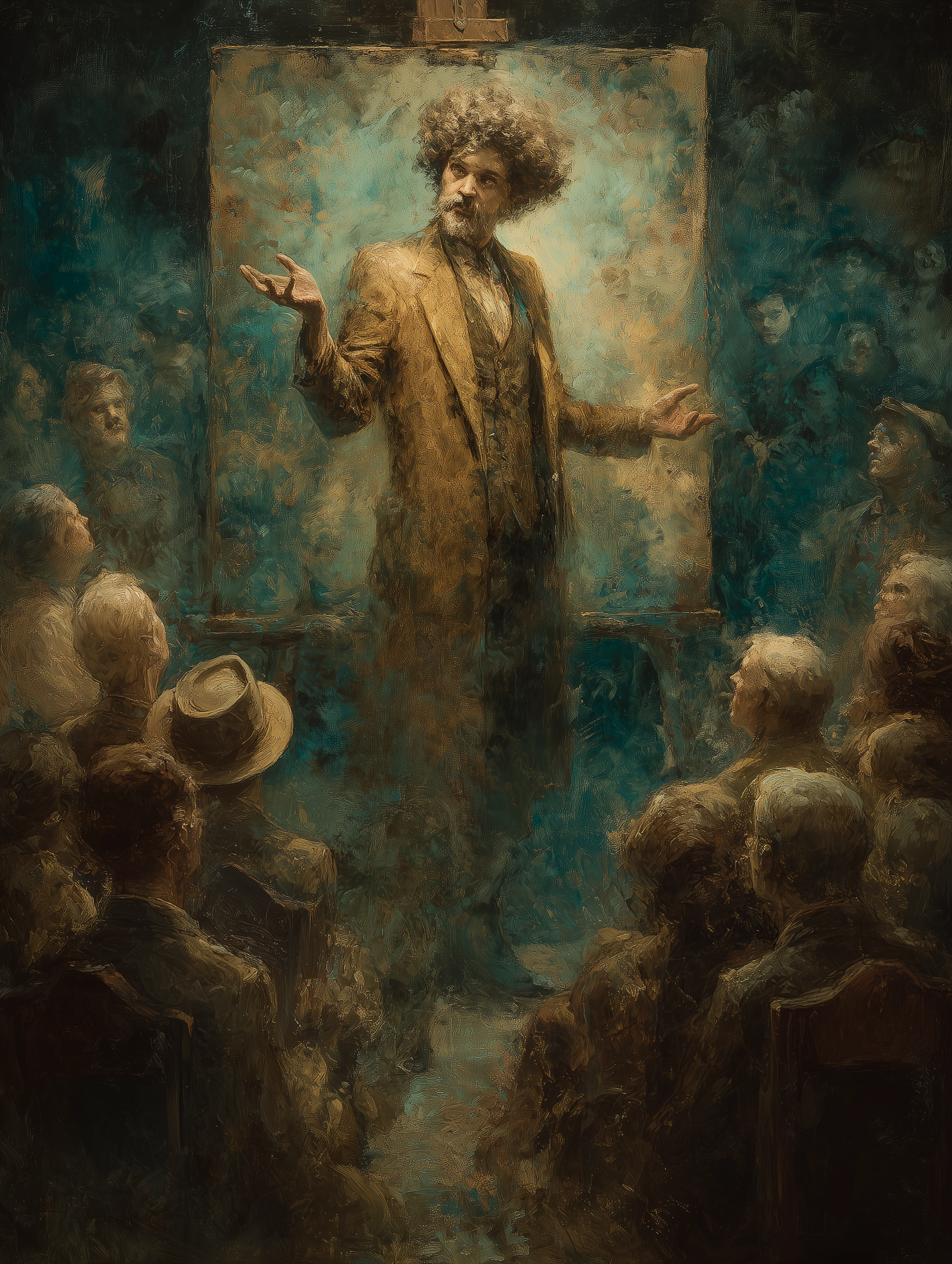
This Saturday, December 20, 2025, Pinwheel Gallery will host an Ekphrastic Poetry event in conjunction with the current exhibition, Winter Shadow / Winter Light. Two of my paintings, Frau Perchta’s Warning and Berctha’s Gift, will be part of that exchange.
Until recently, I’d never witnessed ekphrastic poetry, nor had I encountered the term ekphrasis itself. When I began reading about it, I was struck by how ancient and somewhat radical the practice is.
The word ekphrasis comes from ancient Greek, meaning to speak out. In its earliest uses, it referred to vivid description, but over time, it came to mean something more relational: writing that responds to visual art. Not to explain it or translate it literally, but to stand in front of it long enough for language to arise.
One of the most famous examples appears in Book 18 of Homer’s Iliad. At the height of war, the narrative pauses while Hephaestus forges a shield for Achilles. Homer devotes over a hundred lines to describing it, not as an object, but as a world.
Here is a brief excerpt (from a common English translation):
“Two cities radiant on the shield appear,
The image one of peace, and one of war.
Here sacred pomp and genial feast delight,
And solemn dance, and hymeneal rite;
Along the street the new-made brides are led,
With torches flaming, to the nuptial bed:
The youthful dancers in a circle bound
To the soft flute, and cithern's silver sound:
Through the fair streets the matrons in a row
Stand in their porches, and enjoy the show.”
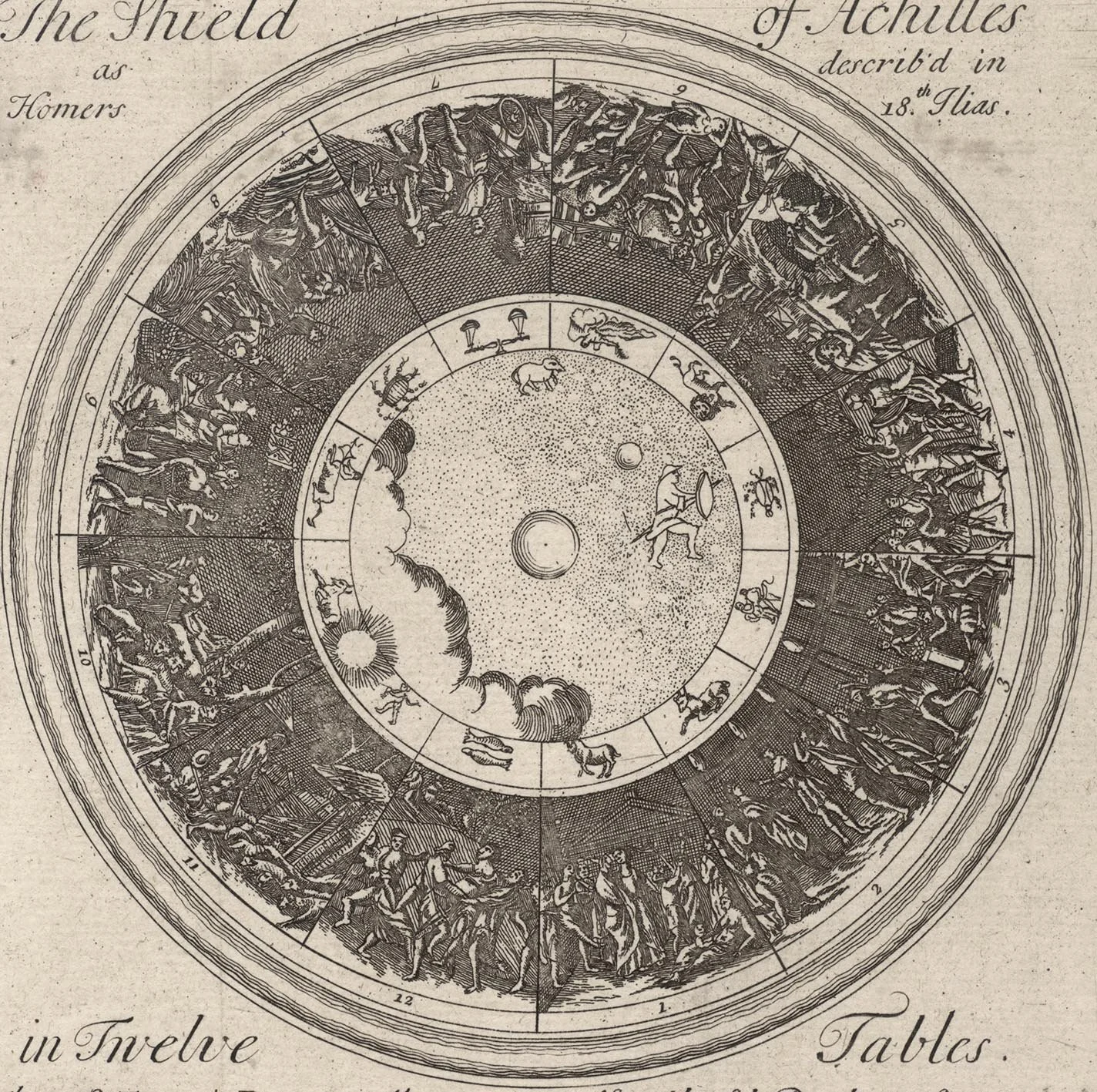
I’ve recently recovered from an Achilles injury, and reading this poem about Achilles at this moment felt strangely intimate. In Homer’s telling, a shield meant to protect the body displays images of harvests, dances, cities at peace and war, and stars wheeling overhead. Violence and beauty are intertwined. Life dances. Time stretches.
I think that feels close to what ekphrasis is all about.
Rather than lecturing about an artwork’s meaning, ekphrastic writing becomes a part of it. The poet doesn’t decode the image so much as acknowledge it, allowing memory, emotion, or narrative to emerge in response. The resulting poem belongs neither entirely to the artist nor to the poet, it lives somewhere in between.
Ekphrastic poetry is very much alive today. Contemporary poets frequently write in response to paintings, photographs, sculptures, and installations... sometimes in museums, sometimes in galleries, sometimes in direct collaboration with artists. These poems may meditate, question, reimagine, or even resist the artwork they address. The goal isn’t agreement, but engagement.
I’m looking forward to witnessing its ephemerality. The poems will be spoken aloud, in the presence of the work, and then they will vanish. The paintings will remain, but briefly, they will have passed through other voices.
That feels especially fitting for the pieces in this current show, which draw on myth, folklore, and emotion. Figures like Perchta and Berchta have always been shaped by who tells their story and when. Ekphrasis allows that shaping to happen in real time, in public, as a shared act of participation.
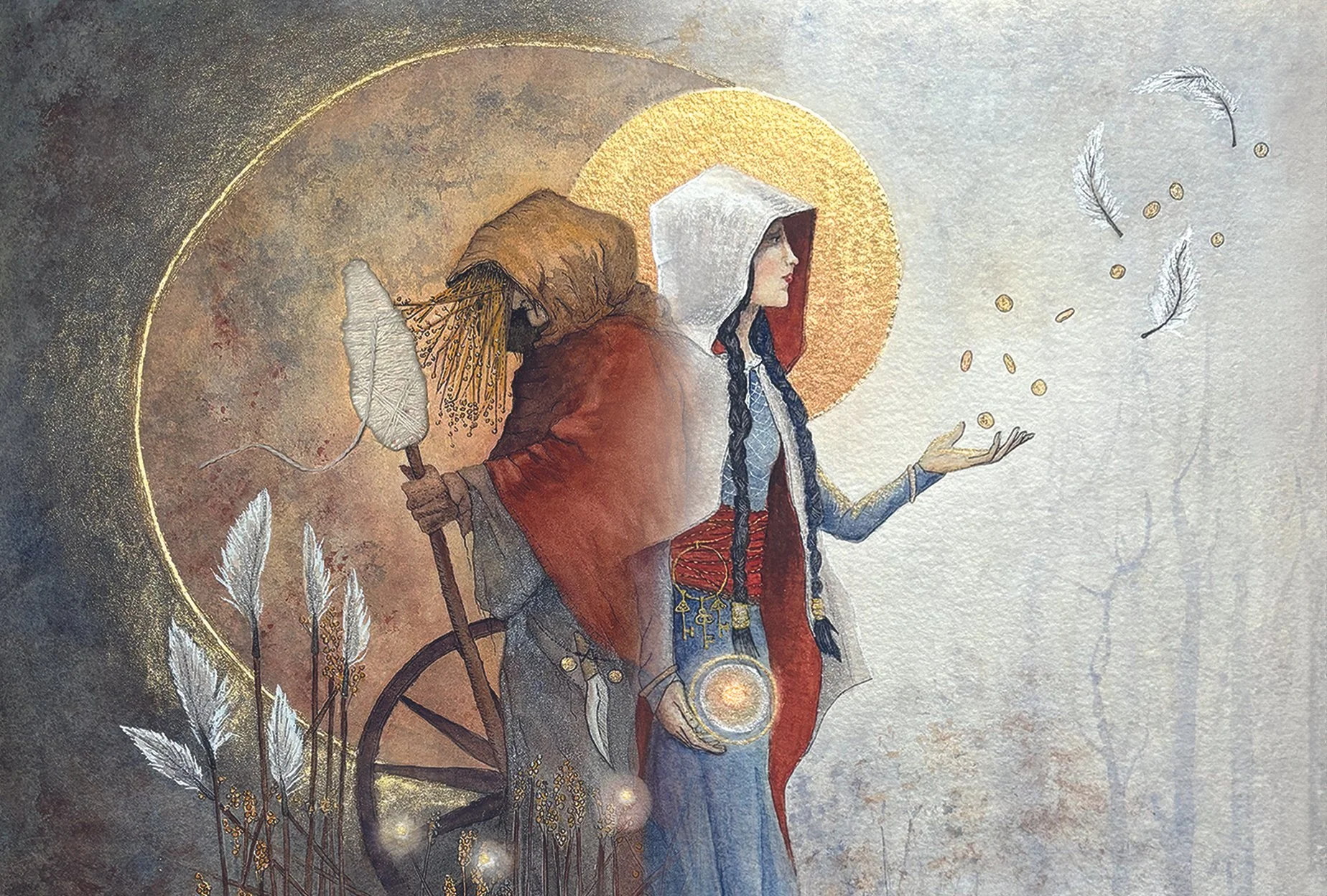
Frau Perchta’s Warning & Perchta’s Gift
If you’ve never experienced ekphrastic poetry before, consider this an invitation to listen. Feel free to participate, or to witness. This event will happen December 20, 2025 from 3pm to 5pm at Pinwheel Gallery in Cleveland, OH.
Pinwheel Gallery
2019 Broadview Rd
Cleveland, OH 44109